You built this one with real care. Ten questions, a clean design, a subject line that wasn’t even that annoying: “Two minutes, we promise.”
You sent it to 500 customers.
Twenty-two answered.
Not twenty-two percent. Twenty-two people. The other 478 opened it, or didn’t, and said nothing either way.
Here’s the part that actually stings: that’s not a broken campaign.
That’s the going rate.
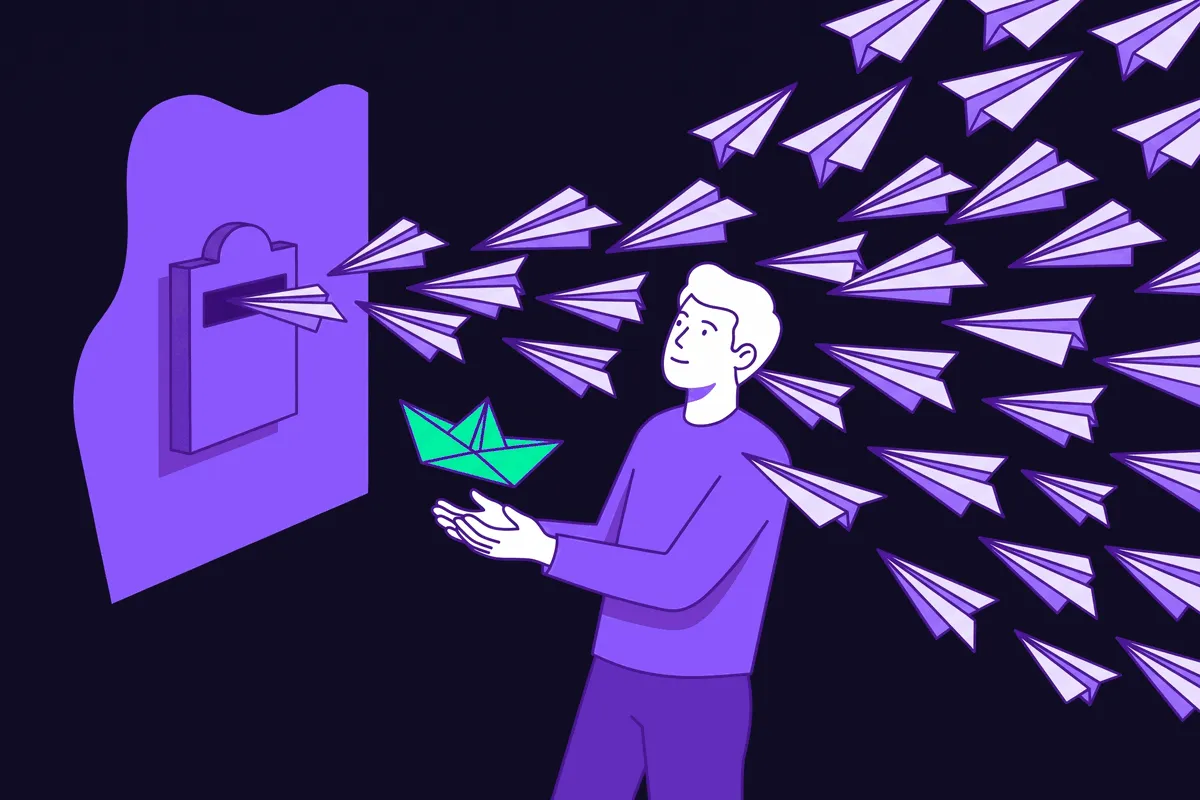
Why is my survey response rate so low?
Your survey response rate is low because customers are asked constantly, rarely see anything change after they answer, and now filter your email through an inbox flooded with AI-generated noise.
It isn’t your subject line or your incentive. It’s structural: too many blasts, too little payoff, in a channel that’s more crowded than it’s ever been.
That’s the whole diagnosis. Here’s the decade of evidence behind it, and the one thing that actually works instead of sending harder.
Response rates were already falling, years before AI showed up
Here’s what the benchmark pages won’t tell you: this didn’t start in 2026.
Survey response has been sliding for decades, across every discipline that runs one.
A widely cited review of business and management research found scholars had been sounding the alarm on shrinking response for years, long before anyone blamed “survey fatigue” by name. It’s documented in a British Journal of Management review of response rates in business research.
It’s not just academic surveys.
Even the gold standard of public-opinion polling caught the same current. Pew Research Center’s own telephone response rates fell into the single digits after what it called “decades of consistent decline,” a trend it says the whole industry has felt, not just its own team.
And government surveys, the ones people are legally obligated to answer, aren’t immune either.
A federal review found some of the U.S. Census Bureau’s own retail and manufacturing surveys lost more than 20 percentage points of response in just five years, with others down more than 10, all logged in a Department of Labor summary of federal survey response-rate trends.
Read that again: mandatory government surveys lost 10 to 20 points in five years. Your optional customer survey never had a chance.
Response rates have been falling for decades, across academic research, public polling, and federal data collection. If a mandatory government survey can lose 20 points in five years, a “would love your feedback” email from a brand was never going to hold steady.
So what changed the pace, why does 2026 feel worse than 2020?
2026 finished the job: the AI-saturated inbox
The channel your survey lives in got noisier, fast.
There are now roughly 392 billion emails sent every day worldwide, and for the first time, more than a third of that volume is machine-written, not human. A 2026 report on inbox trends puts AI-generated and system-generated mail at 38% of all traffic this year, up from an estimated 25% just four years ago.
Your customer isn’t scanning a quiet inbox for your one honest question.
They’re wading through auto-generated receipts, AI-drafted sales sequences, and a dozen other “quick survey” requests, all fighting for the same six seconds of attention.
Seventy percent of professionals now name email their single biggest source of work stress, per that same report. A survey invite reads as one more demand on a day that already has too many.
Your ask isn’t just competing with silence anymore. It’s competing with noise that looks a lot like you.

That’s the macro story. But there’s a more personal reason your specific customers went quiet, and it has nothing to do with volume.
Why “we’ll use your feedback to improve” stopped working
Every customer marketer has sent a version of this line: “your feedback helps us improve.”
It used to be enough. It isn’t anymore.
People have filled out dozens of these things by now, and most of them vanished into a spreadsheet nobody ever mentioned again. So the second ask doesn’t get read as a genuine invitation. It gets read as a rerun.
Customer-success teams see this pattern constantly when they compare notes: the surveys that go unanswered aren’t necessarily the ones asking the wrong questions. They’re the ones asking people to redo work they already did once, for a payoff they never saw land.
Silence isn’t apathy. It’s a memory.
A customer who answered honestly last time, watched nothing change, and got asked again anyway isn’t ignoring you out of laziness. They’re pattern-matching, correctly, to a form that doesn’t lead anywhere.
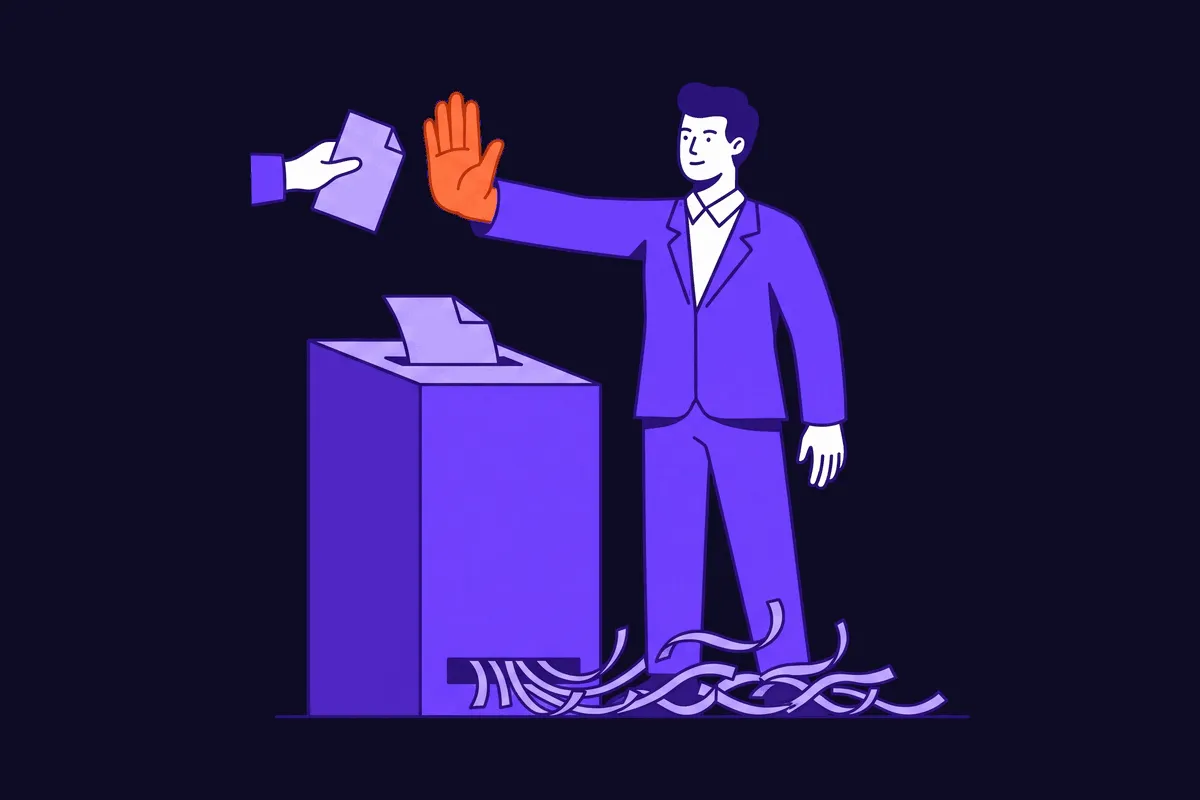
“We’ll use your feedback to improve” is now the least convincing sentence in a survey invite. Most recipients have already tested it and watched nothing happen.
Here’s the uncomfortable follow-on: a rising response number can lie to you too.
The customers most likely to stop answering aren’t your happiest or your angriest. They’re the lukewarm middle, the ones with nothing urgent to report either way.
When they drop out first, your remaining respondents skew toward the extremes. Your average score can drift upward even while real sentiment holds flat or slides.
A shrinking, self-selecting sample tells you less every quarter, not more, no matter what the summary chart shows.
So chasing a better response rate on the same broadcast is optimizing the wrong number.
What actually moves a survey response rate, and what doesn’t
Before you conclude the format is dead, it’s worth being honest about what genuinely helps, because some of it does.
- Timing beats everything else. Asking right after an experience, not a week later, is the single biggest lever most teams control. A stale ask reads as an afterthought even when the question is good.
- Shorter genuinely wins. Every extra question past the first one bleeds completions. One sharp question beats ten polite ones, every time.
- Naming the fix beats promising one. “We shortened onboarding because of what you told us last quarter” gets a reply. “We value your feedback” doesn’t, because it isn’t a fact, it’s a slogan.
- A blast to everyone still underperforms a targeted ask to the right few. Surveying people with no real stake in the answer drags your rate down and teaches your best customers that the request isn’t really for them.
None of these tactics reverse the decade-long trend above. They just slow it, on the margins, for the exact same format. If you want the full tactical playbook for the asks that actually land, we broke it down in how to collect customer feedback that’s worth acting on.
What actually works is smaller and stranger: fewer people, asked something that matters, in a way that lets them talk back.
The fix isn’t a better form, it’s a real conversation
This is the part most survey advice skips, because it means admitting the format itself, not the wording, is the ceiling.
A form only ever gets you what a person is willing to type into a box. It can’t ask the natural follow-up, and it can’t notice when someone hesitates on a rating and dig into why.
It asks the same ten questions of your happiest customer and your most confused one, and calls that fair. This is exactly when an AI-moderated conversation beats a survey, and when it doesn’t: scale without losing the follow-up question a real researcher would ask.
That’s the gap hollie was built to close. Instead of blasting a form at everyone, she has a real, individual conversation with each customer and asks the follow-up a good researcher would ask.
She brings back the why, not just a number. You can try it free for 14 days and see what a handful of real conversations surface that 500 blasted invitations never will.
You don’t need more replies to a form nobody wants to fill out.
You need fewer, richer conversations with people who actually have something to say.
Frequently asked questions
What is a good survey response rate for a B2B SaaS company in 2026?
There’s no single number, because channel and audience swing the range enormously, from single digits on a cold email link to well over a third for a well-timed in-app prompt.
Judge your rate against your own history and your own channel, not a generic industry average. Treat a falling trend as more informative than any one snapshot.
Does adding an incentive fix a low response rate?
It can nudge the number up, but it doesn’t fix the underlying reason people stopped answering. An incentive rewards the act of clicking, not the belief that anything will change. Pair it with visible follow-through, or the lift fades by the next send.
Should I keep sending the same survey if my response rate keeps dropping?
A falling rate on an unchanged survey is a signal to change the method, not just the wording. If the same audience has answered several rounds with no visible payoff, sending it again mostly proves to them that nothing will happen this time either.
Is a low response rate itself a warning sign about churn?
It can be. Customers who feel unheard often go quiet everywhere, not just in your survey tool, and quiet accounts are exactly the ones that later show up as a surprise cancellation.
For the deeper version of that pattern, see how to understand why your customers really churn. Falling response is worth investigating on its own, not dismissed as a measurement nuisance.
The silence was never the mystery
Your customers didn’t get lazier. They got asked more, promised more, and shown less.
Fix the loop before you fix the wording.
Ask fewer people something real, close the loop out loud, and the next ask gets answered.
The Bottom Line
Survey response rates aren’t falling because of a bad subject line. They’ve been declining for decades, and a noisier, AI-saturated 2026 inbox only sped it up.
The fix isn’t squeezing another point out of the same blast. It’s asking fewer people something that matters and proving their last answer led somewhere. That’s the gap real conversations close, and it’s why hollie has them instead of sending one more form.