You wrote the NPS survey the way the playbook says to. One question, ten seconds to answer, sent to every account on your book.
Three hundred sends. Fourteen replies.
Two people love you. Three are furious. The other nine sit somewhere in the middle, and Monday’s board deck still needs a number.
That number isn’t a read on your customers anymore. It’s a poll of whoever happened to be paying attention.
Why is my NPS response rate so low?
Most NPS response rates sit in the single digits because the survey lands on the wrong person, arrives with no context, and asks a question the customer has already answered for someone else this month. It’s not a bad subject line. Response rates have been sliding for decades, and 2026’s AI-crowded inbox has pushed the number lower still.
That’s the short version. Here’s what’s actually behind it, and what to do instead.
But there’s a bigger problem hiding inside that low number.
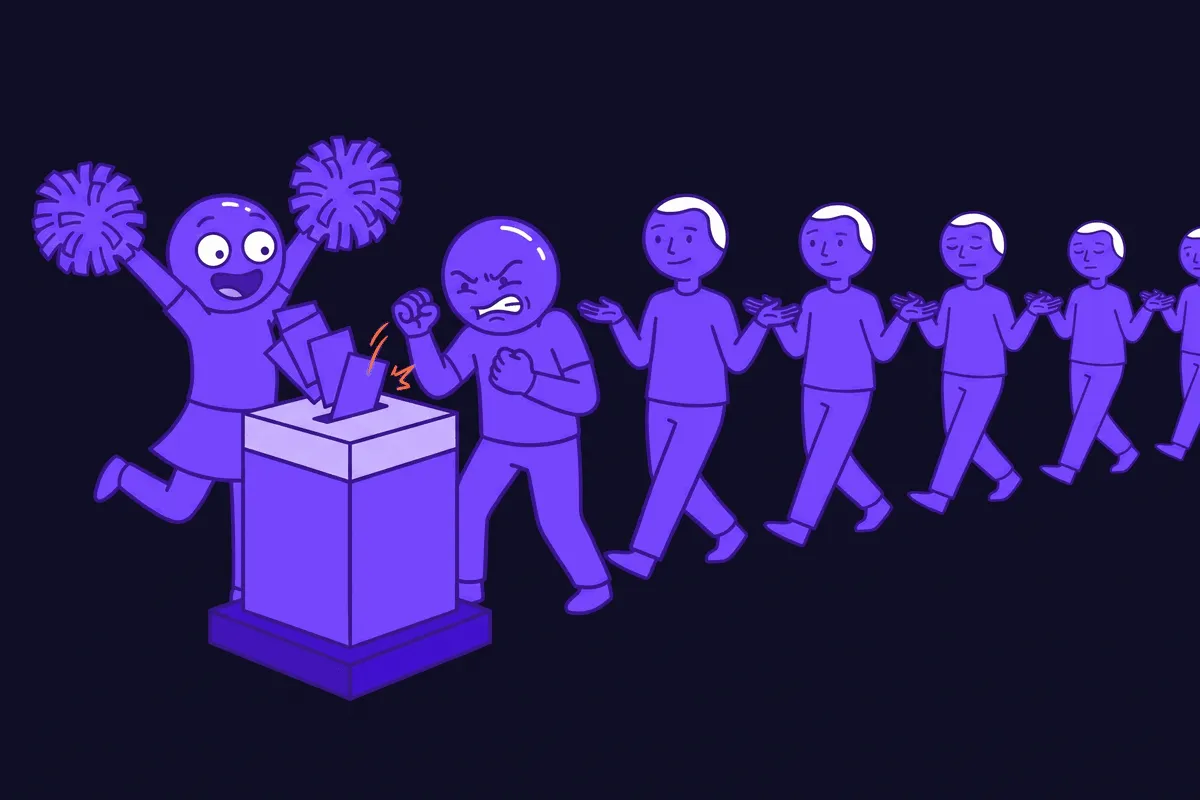
The 14 people who answered aren’t a sample of your book. They’re your loudest fans and your angriest accounts, the only two groups with enough feeling to click a link. Everyone in the quiet, profitable middle, renewing on autopilot without incident, said nothing at all.
What’s a good NPS response rate in 2026?
Bain & Company, the firm that invented NPS, set the bar over a decade ago and it hasn’t moved since: anything under a 40% response rate for B2C or 60% for B2B is a red flag, by Bain’s own definition. Most CS teams never get within shouting distance of it.
Search r/CustomerSuccess and the same post shows up on repeat: hundreds of sends, single-digit replies, a manager who still wants the score by Friday. That’s not a rare complaint. That’s the norm nobody put in the onboarding deck.
Here’s why the gap matters more than it looks like it should.
Bain’s own methodology walks through the math. A company surveys its book and gets a score of 50: 60% promoters, 10% detractors. Feels great. Then they study the 80% who stayed silent and find that group actually skews negative 40: 10% promoter, 40% passive, 50% detractor.
Weight the two groups together and the real score is negative 22. Not 50.
Bain’s own worked example: a company’s NPS looked like a healthy 50 from the loud fifth who answered. Weight in the silent 80% and the true score flips to negative 22. The number didn’t change. The blind spot did.
That’s not a hypothetical. That’s what a single-digit response rate is quietly doing to your dashboard right now.
Why customers are ignoring your NPS survey
Three things work against you at once, and none of them are about your subject line.
Wrong person, wrong survey. The top answer in that same CS thread put it bluntly: a dead NPS survey almost always went to the wrong audience.
NPS was built to ask the champion and the people actually using the product day to day about loyalty, not the billing contact who’s never opened it. Send it to a distribution list instead of a name, and you’ve already lost the reply before you hit send.
They’ve already answered this exact question this week, for someone else. Your customer isn’t only your customer. They’re getting a 0-to-10 loyalty scale from their bank, their airline, their other four vendors, all asking the same flavorless question the same flavorless way.
And the inbox itself got worse before you even sent it. Pew Research watched its own telephone response rate fall from 36% in 1997 to 9% by 2012, and it’s held near there ever since, a decline researchers describe as consistent across every survey mode, not just phone calls.
Layer 2026’s inbox on top of that. AI tools now write a growing share of the email a customer receives, and telling a real ask apart from templated noise has become its own small daily chore.
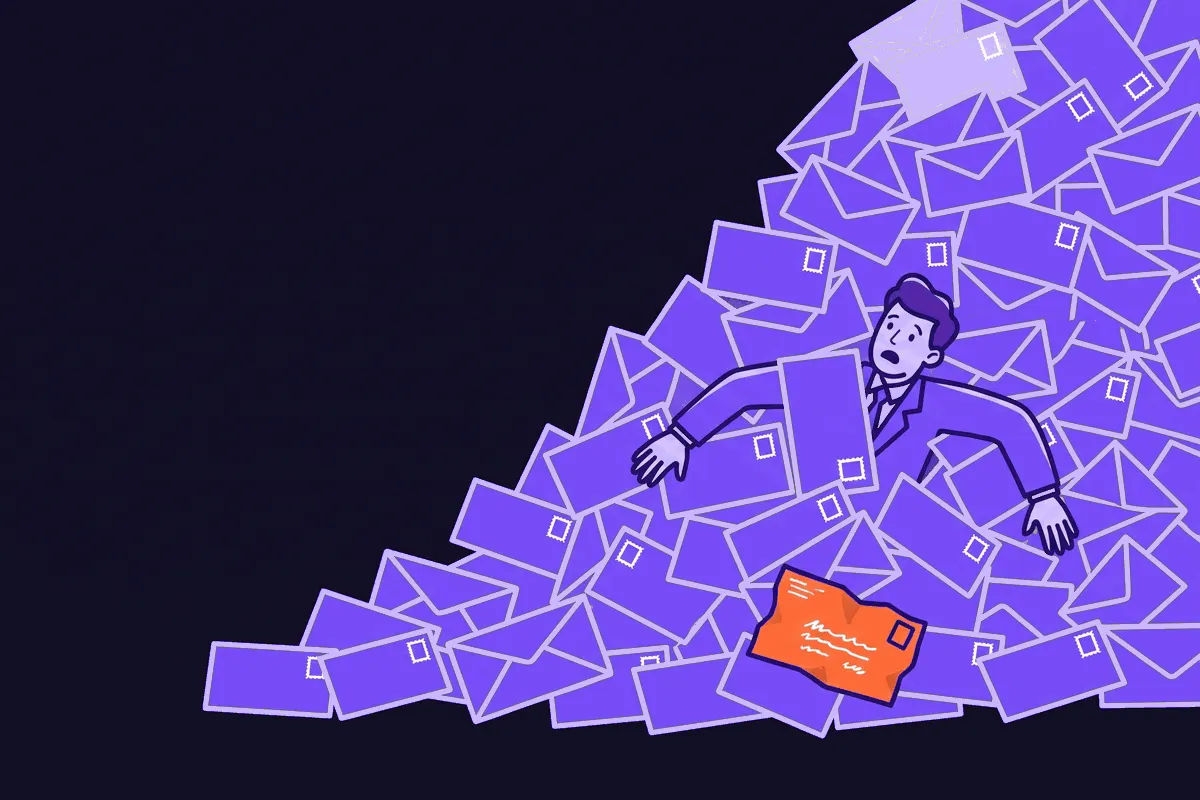
Your NPS survey isn’t competing with silence. It’s competing with everything else asking for sixty seconds today, and most of it looks exactly the same.
An August 2024 Forbes analysis found almost one in five customers have stopped doing business with a company because its survey was too long. A bad survey doesn’t just get skipped. It gets remembered.
The fix isn’t a better survey. It’s fewer, sharper conversations
Here’s the thread running through every “why is nobody answering” post on that subreddit: the fix people actually found wasn’t a shorter survey or a smarter send time.
It was talking to fewer customers, on purpose.
One reply cut straight through it: run 10 to 20 real conversations instead of chasing 500 survey sends, and you’ll walk away with the why a 0-to-10 scale never gives you.
A number tells you a customer is a 6. A conversation tells you they’re a 6 because renewal timing collides with their budget freeze. That’s a save, not a statistic.
This isn’t a new idea, it’s just inconvenient for a team already stretched across a full book of accounts.
We’ve made the same case for broadcast feedback asks that get you silence versus timed, specific ones. The same trade-off shows up wherever a team tries to scale past a handful of calls a week, covered in when AI-moderated conversations can actually stand in for a survey.
Instead of “How likely are you to recommend us, 0 to 10?” try “What’s changed for you since we last talked?” It’s not scorable in a spreadsheet. It’s the question that actually explains the score.
How to run 10-20 conversations without losing your week
You don’t need a research team for this. You need a short list and one good question.
- Pick a mix, not a random sample. A handful of accounts that went quiet, a couple of clear promoters, and at least two you’d call detractors if you’re honest. That spread tells you more than 500 identical replies from whoever happened to open the email.
- Ask what changed, not how they’d rate you. “What’s different since your last renewal?” surfaces the budget freeze, the champion who left, the feature that finally landed. A 0-to-10 scale surfaces none of it.
- Keep it to 15 minutes, on a call or a specific async thread. You’re not running a research study. You’re closing the gap between the score and the reason for it.
- Tie every conversation back to what actually happens next. The real value shows up when you connect what you heard to the real reasons customers churn, instead of the polite line on an exit form.
Fifteen or twenty conversations a quarter, run against the accounts most likely to explain the score, will teach a 50-to-500-account book more than a survey that half your customers have already learned to ignore.
The honest problem is time. Fifteen minutes times twenty accounts is a real chunk of a week you don’t have spare, on top of renewals, QBRs, and the rest of your book.
That’s the gap hollie closes. She’s holito’s AI agent, and she has the actual conversation with each account on her own channel, then brings back what changed in their own words, not a score that already threw the nuance away. See how holito runs it.
Frequently asked questions
What’s a good NPS response rate?
Bain & Company, which created NPS, sets the bar at 40% or higher for B2C and 60% or higher for B2B. Most companies land well under that, often in the single digits.
That means most NPS programs already run on a self-selected slice of loud customers, not a real read on the book.
Why did my NPS response rate suddenly drop?
Usually one of three things: the send list drifted toward the wrong contacts (billing instead of the person actually using the product), the survey stopped feeling timely, or your customers are simply fielding more of these requests than a year ago and have started ignoring the pattern.
Is a low-response NPS score still statistically valid?
Not on its own. A score built from a small, self-selected slice of respondents skews toward whoever felt strongly enough to answer, your happiest and your angriest accounts. Bain’s own modeling shows a healthy-looking score can flip negative once the silent majority is weighted in.
How many customer conversations replace one NPS survey?
CS teams that have moved away from mass NPS blasts generally run 10 to 20 real conversations a quarter with a deliberately mixed group: a few at-risk accounts, a few promoters, a few honest detractors.
That’s enough to surface the pattern behind the score, without turning into a full research project.
The score told you nothing. The conversation would have.
Fourteen replies out of three hundred was never a customer sentiment score. It was a hand count of who was angry enough, or happy enough, to click.
Pick a smaller, sharper group. Ask what changed. Listen for the why.
The Bottom Line
A single-digit NPS response rate isn’t a data problem you fix with a better subject line. It’s a sampling problem: only your loudest fans and angriest accounts bother to answer, and the quiet, profitable middle says nothing at all.
Run 10 to 20 real conversations with a deliberately mixed group each quarter and you’ll learn more than the survey ever told you. When your book is too big to do that alone, hollie can have those conversations for you and bring back what actually changed, in the customer’s own words.