You have the cleanest onboarding playbook you’ve ever built. Every step mapped. Every email queued.
And the customer still stalls.
Three weeks in, half the checklist is untouched. Your emails go unanswered. The account you fought to win is drifting before it ever felt the product work.
So you do the obvious thing. You add another step. A slicker guide. One more automated nudge.
None of it moves the needle. Because the playbook was never the problem.
The hardest parts of customer onboarding are the parts your process doesn’t touch: the customer’s side of the table.
This is the map of the five that quietly kill new accounts, and exactly how to fix each one. You’ll get the real reasons onboarding stalls, in the words of the people living it, and the move that turns each one around.
Why is customer onboarding so hard?
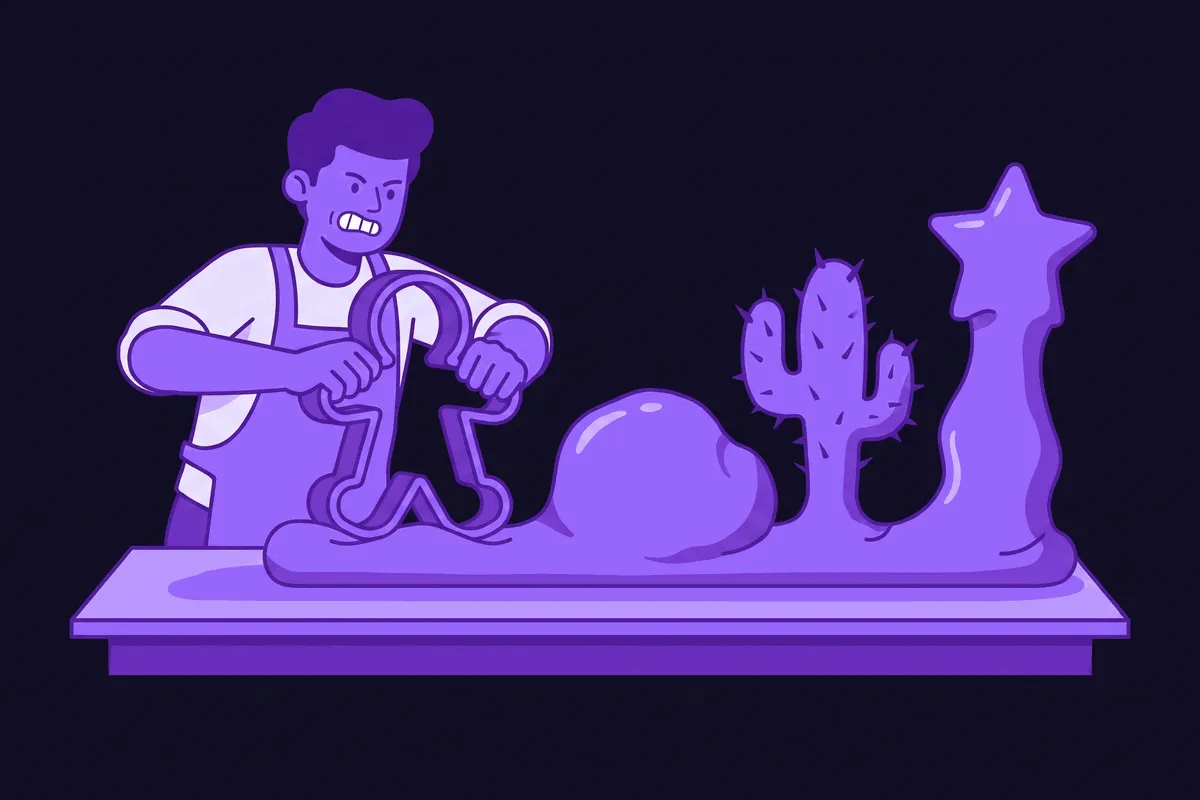
Onboarding is hard because it’s two jobs wearing one name. There’s the logistics job: get them set up and clicking around. And there’s the discovery job: learn what this customer needs to call the purchase a win. Most teams nail the first, skip the second, and onboard everyone toward an outcome they never confirmed.
That gap is expensive.
Per Wyzowl’s onboarding research, eight in ten people have deleted an app because they couldn’t figure out how to use it, and 55% have returned a product they didn’t understand. The same research found 86% would stay more loyal to a company that invests in onboarding them properly.
So the stakes are set at the start, not the renewal.
Onboarding isn’t the warm-up before the real work. It’s the moment the customer decides if they made a mistake.
Get the five challenges below right and the rest of the relationship gets easier. Get them wrong and no feature list saves you.
Every onboarding is really logistics plus discovery. Getting a customer set up is the easy half. Learning what winning looks like for them is the half that decides whether they stay. Skip it and you’re guessing.
The expectation gap: onboarding inherits what sales oversold
Here’s the first challenge, and it starts before you ever meet the customer.
Sales promised the moon to close the deal. Onboarding inherits the crater. The customer arrives expecting the demo they were sold, and your job quietly becomes managing the distance between that pitch and what the product actually does on day one.
Customer success teams name this one constantly: the gap between what sales promised and what can realistically be delivered.
You can’t onboard your way out of it by working harder. You close it by surfacing it early.
On the first call, ask the customer to say back what they think they bought and why. When their answer drifts from reality, you catch it in week one, not at the renewal when they feel misled.
That’s also a signal worth sending upstream. A pattern of oversold deals is a reason customers churn long before onboarding gets the blame.
The fastest way to defuse an oversold deal is to ask the customer what they expect on day one, then reset it kindly. Silence here doesn’t keep the peace. It just delays the disappointment to a worse moment.
The part you can’t control: when the customer goes quiet
Now the one that keeps CSMs up at night.
You can run the perfect process and still watch it stall, because onboarding needs the customer to show up too. As one customer success manager put it, the hardest part is the piece you don’t actually control: keeping the customer’s side engaged.
The signs are always the same. Unclear timelines. Fuzzy ownership. Nobody on their side quite sure who does what, or when they’ll see progress.
And a customer who doesn’t know what happens next stops replying.
So make their side impossible to get wrong. Assign one owner on their team by name. Put dates on every dependency. And tell them why each step matters to the outcome they care about, not to your checklist.
That last part is the lever most teams miss.
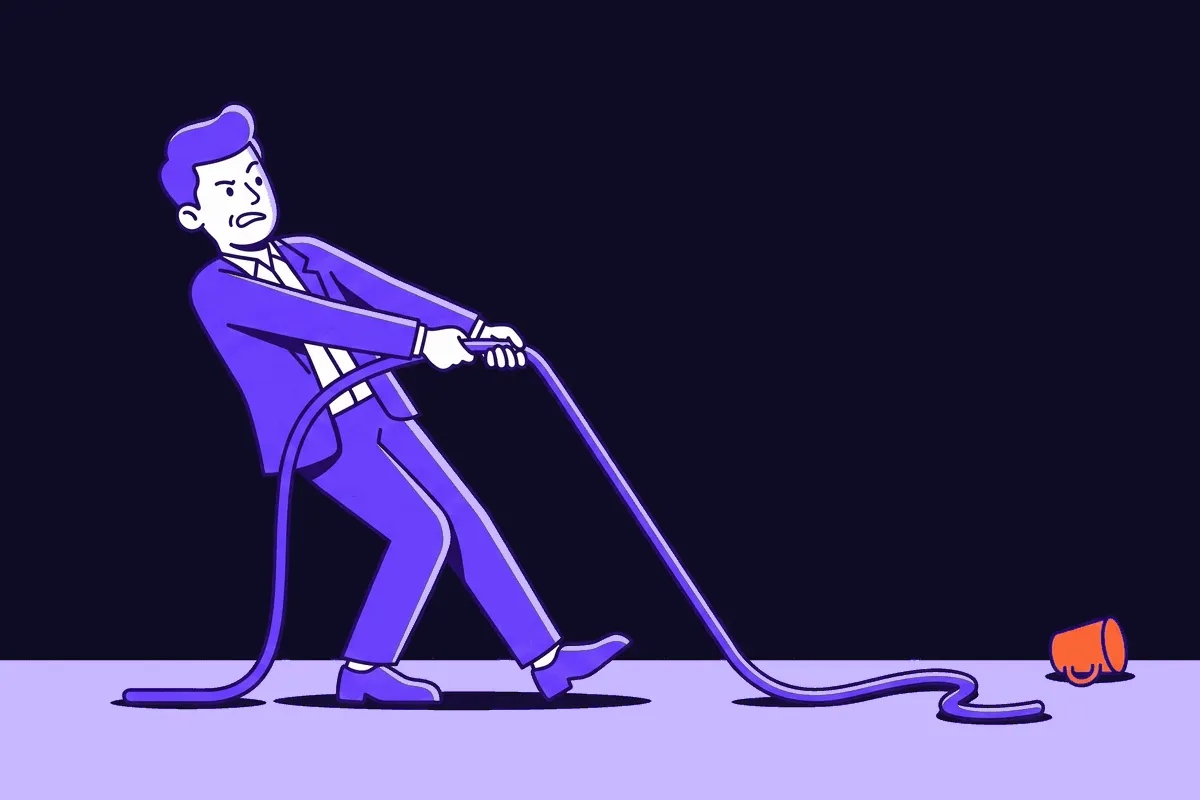
People chase a deadline when they can see what it unlocks for them. A step framed as “so your team hits its first report by Friday” gets done. A step framed as “complete section three” gets ignored.
Attach each onboarding task to the customer’s own goal, not your internal stage name. “This gets your team to first value by Friday” pulls harder than “step three of seven” ever will.
Why one onboarding flow can’t fit every customer
This is the challenge that makes onboarding feel like whack-a-mole.
Every customer arrives different. Different setup, different tools, different internal blockers, a different definition of what “working” even means. One rigid flow gets tuned for the average customer, who doesn’t exist, so it fits almost nobody well.
CSMs feel this daily. Every account has its own systems, its own timelines, its own politics, and the standard playbook bends awkwardly around all of it.
The reflex is to build more branches into the flow. That’s a trap. You end up maintaining a maze.
The real move is to personalize by outcome, not by feature. Sort new customers by the result they’re chasing, then send each group down the shortest path to their version of the first win. Same product, different route in.
And the demand for that is not soft. McKinsey found 71% of customers now expect personalized interactions, and 76% get frustrated when they don’t get them. A one-size flow doesn’t just underperform. It actively annoys the people you just signed.
The catch is that personalizing onboarding means knowing each customer’s goal before you start. Hold that thought. We’ll close it below.
The messy handoff: data, integrations, and manual intake
Here’s the challenge nobody puts on the sales deck.
Onboarding is where your product meets the customer’s real, messy world. Their data is dirtier than they admit. Their integrations need IT access they haven’t lined up. The “plug-and-play” they were sold hits a wall the moment it touches a live system.
One founder said it plainly: their client onboarding error rate was embarrassing, and they couldn’t see how to fix it without hiring more people.
That’s the tell. When onboarding quality depends on throwing more bodies at manual intake, the process is the problem, not the headcount.
Every login you chase by hand, every field a junior re-types from a call, every “wait, which CRM?” is an error waiting to happen and a day added to time-to-value.
So attack the handoff on two fronts.
- Front-load readiness. Before kickoff, tell the customer exactly which access, data, and owners you’ll need. “Most teams take two weeks because you’ll need admin on A, B, and C” saves a month of surprises.
- Kill the manual re-typing. The intake that a tired human transcribes from six calls is where the errors breed. Capture it once, structured, at the source.
Low friction is the whole game here. Harvard Business Review’s research on customer effort found that reducing the work a customer has to do builds loyalty far more reliably than trying to dazzle them. In onboarding, less effort beats more delight every time.
If the only way to lower your onboarding error rate is to hire more people to chase and re-type, you don’t have a staffing gap. You have a process that’s leaking data at every manual handoff. Fix the leak first.
The real problem: you never asked what success looks like
Every challenge above traces back to one root.
You onboarded the customer without ever asking them what winning actually looks like. Their goal. Their setup. The one outcome that would make them renew without a second thought. You standardized in the dark, then acted surprised when the standard didn’t fit.

The fix sounds almost too simple: have a real conversation with each new customer at the start.
Not a form. Not a fourteen-field intake page they abandon. A genuine back-and-forth that pulls out their actual goal, their real blockers, and what “done” means to them, the way good discovery questions do the work a survey can’t.
Do that, and every other challenge shrinks. You catch the oversold promise. You know who owns what. You route them by outcome. You line up the integrations before they bite.
There’s just one reason teams skip it: having that conversation with every single new customer is a full-time job you don’t have.
That’s the gap hollie closes.
hollie is holito’s AI agent. She has a real onboarding conversation with each new customer, on their own channel, and asks the sharp follow-up when an answer is vague.
Then she hands you back one clear brief per customer: their goal, their setup, their blockers, and what success means to them, ranked.
You personalize onboarding at scale, without a human on every kickoff call. See how holito does it.
It’s the same discipline behind knowing what to automate in onboarding and what to keep human: win them with a person, learn from them with a system.
The single highest-impact onboarding move is also the rarest: ask each customer what winning looks like before you start. Every other challenge gets easier once you know the answer.
Frequently asked questions
What is the biggest challenge in customer onboarding?
The biggest challenge is the part you don’t control: keeping the customer’s side engaged. You can run a flawless process, but if ownership and timelines are unclear on their end, the customer goes quiet and the account stalls. Assign one named owner, put dates on every step, and tie each task to their goal.
Why do customers churn during onboarding?
Customers churn during onboarding when they never reach first value. An oversold promise, a slow messy setup, or a generic flow aimed at nobody all delay the moment the product clicks. Poor onboarding is a leading reason people abandon a product, which is why reducing churn starts at signup, not at the renewal.
How do you personalize onboarding at scale?
Sort new customers by the outcome they’re chasing, not by plan or feature, then send each down the shortest path to their first win. That means learning each customer’s real goal up front, through a real conversation at kickoff, not a rigid flow built for an average customer who doesn’t exist.
How long should customer onboarding take?
There’s no fixed number, and chasing a shorter calendar misses the point. What matters is time-to-first-value: how fast the customer feels one real win. Map that moment, strip every step that doesn’t move them toward it, and measure onboarding by when value lands, not by when the checklist is finished.
Onboarding is a conversation, not a checklist
The playbook was never the hard part.
The hard part is the customer: what they were promised, whether they show up, what they actually need, and what winning looks like to them.
Ask first. Route by outcome. Then onboard.
The Bottom Line
Customer onboarding stalls when you run one standard flow toward an outcome you never confirmed. Close the expectation gap, make ownership clear, personalize by result, clean up the handoff, and above all, ask each customer what success looks like before you start.
hollie can have that conversation with every new customer for you and hand back one ranked brief per account, so your team onboards toward the right outcome instead of guessing at it.