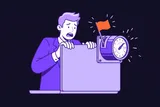
Your signups climb. Your ad spend climbs. Your revenue sits still.
So you buy more traffic. More signups land. The number still won’t move.
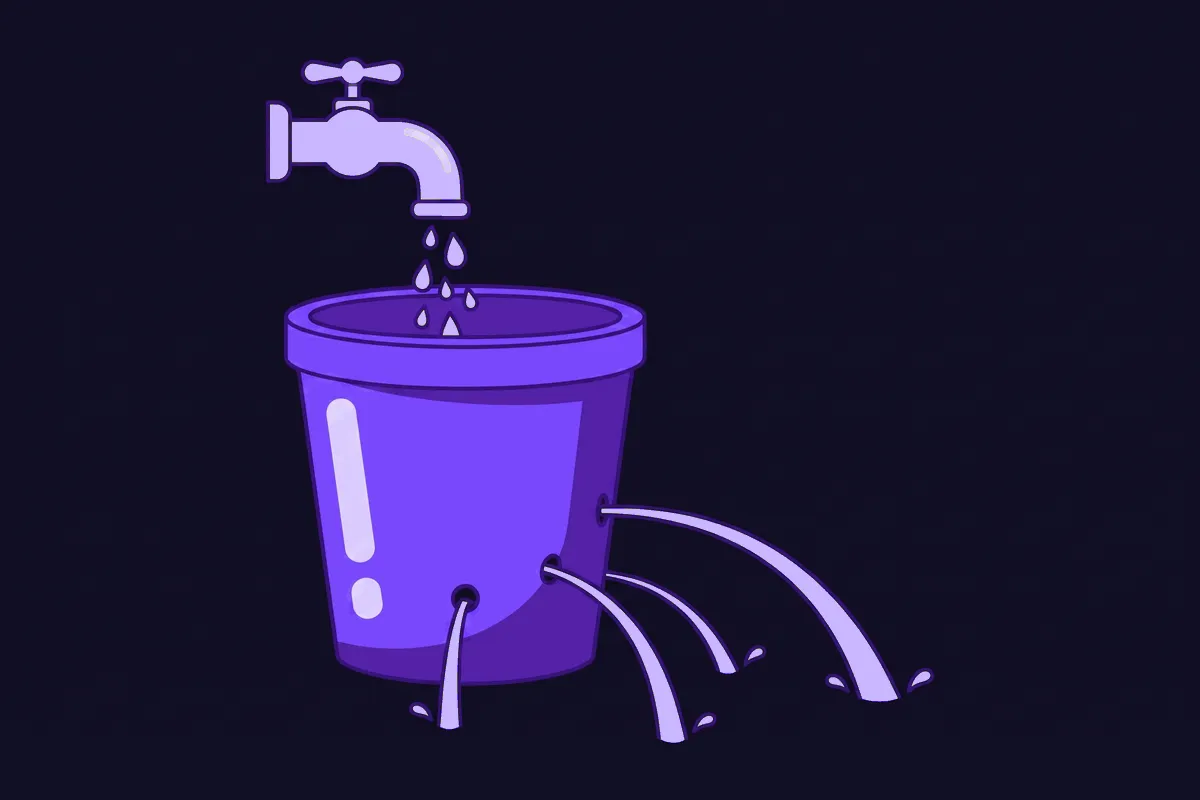
Here’s what’s really happening: you’re filling a leaking bucket.
Every customer you pour in the top drains out a hole near the bottom. Faster acquisition just makes the water look busy. The level never rises.
That’s churn. And you can’t out-market it.
This is the playbook to reduce SaaS churn at the source. Not with a discount or a save-offer bribe, but by plugging the five holes where customers actually leak out.
You’ll get where churn really starts, how to hit value before a new customer quits, the slow fade to watch for, and how to turn “cancel” into a conversation.
Why is reducing churn the fastest way to grow?
Reducing churn compounds. Every customer you keep keeps paying, so retention lifts revenue without lifting your acquisition spend. Companies with best-in-class retention grow up to three times faster than their peers, and keeping a customer costs a fraction of winning a new one. Plug the leak and every marketing dollar suddenly works harder.
The math is brutal on a leaky bucket.
At 5% monthly churn you lose almost half your customers in a year. For a small B2B tool that’s a normal starting point, not a worst case.
Now the economics. According to Harvard Business Review, winning a new customer costs 5 to 25 times more than keeping one, and a 5% lift in retention can raise profits by 25 to 95%.
And retention is what separates the fast companies from the stuck ones.
ChartMogul’s SaaS Retention Report found businesses with net retention over 100% grow 43.6% a year, against just 13.1% for those under 60%.
Retention isn’t a support metric. It’s your growth engine.
You already paid to acquire these customers. Keeping one costs a fraction of winning a new one, and every point of churn you remove drops straight to the bottom line.
Fix the front door: most churn starts at signup
Here’s the truth almost nobody wants to hear: most churn isn’t a lifecycle problem. It’s a front-door problem.
You attracted someone with promise A. You delivered strength B. So of course they left.
They didn’t fail your onboarding. You sold them the wrong story, and the invoice just made it official.
Lincoln Murphy calls this the customer’s desired outcome: people stay when your product gets them the result they came for, in a way that fits how they work. Invite the wrong people in and no onboarding on earth will save them.
So fix the front door before you touch the funnel.
Look at the customers who never churn. What do they have in common, who are they, what did they want?
- That overlap is your real buyer.
- Aim your acquisition squarely at them.
- Define exactly who your product is for so your marketing stops inviting the wrong crowd.
Slick onboarding and a heroic success team can’t save a customer who was never right for the product. Fix who you let in before you rebuild what’s inside.
Get customers to value in the first 72 hours
Most churn is decided in the first three days. Not because the product is weak. Because the customer never reached the moment it clicks.
Every product has that moment. The “oh, THIS is why I need it” beat. Your only job in onboarding is to get them there fast.
So map it. When exactly does a new customer feel the first real win?
Then strip everything else out. Cut every setup step, every tour, every optional field that doesn’t move someone toward that first win. However proud you are of a feature, if it isn’t on the path to value, it isn’t onboarding.
Picture the two versions side by side:
- The slow version: a twelve-field setup wizard, a tour of every menu, then an empty dashboard staring back. The customer has to build value before they ever feel it.
- The fast version: sample data pre-loaded, one action that produces one real result, the aha in ninety seconds. Value first, setup later.

If a step doesn’t move a new customer toward their first win, cut it. Time-to-value quietly decides whether they stay.
Turn feedback into a loop your customers can see
A feature-request box that vanishes into the void tells your customer one thing: you don’t matter.
So close the loop instead. Show what’s being considered, what’s in progress, and what shipped because someone asked for it.
The strongest version is the most personal one. When you ship the thing a customer requested, email them directly: “remember when you asked for this? It’s live.”
That message does something a discount never will. It turns a customer into a co-creator.
And people who see their own fingerprints on the product don’t go looking for the exit.
“You asked, we shipped it.” Nothing builds loyalty faster than a customer seeing their feedback become a real feature. Co-creators rarely churn.
Catch the silent fade before the renewal
Churn is rarely a bolt from the blue. It’s a slow fade you can watch in real time, if you’re actually looking.
The warning isn’t an angry ticket. It’s silence. Logins thin out. A core feature goes cold. The setup checklist never gets finished.
Track the leading indicators the renewal date won’t show you: skipped onboarding steps, feature usage decaying over 7, 14 and 28 days, support tickets that close with no follow-up.
A green health score means nothing if the usage trend underneath it points down.

When an account starts slipping, move while it’s still yours to save. Reach out, ask what changed, and get ahead of the trigger before they act on it. If you want the full diagnosis, here’s how to understand why your customers really churn so you fix the cause, not the symptom.
A customer who logged in daily and now logs in weekly is a louder signal than any green status colour. Act on the trend while the account is still yours to keep.
Make the cancel flow a conversation, not a dropdown
Most cancel flows are a dropdown and a goodbye. “Reason for leaving?” Six options. Submit. Gone.
You just threw away the most honest moment you’ll ever get with that customer.
Because a huge share of “I’m done” isn’t done at all. Dig into cancellations and you’ll find a big chunk are really “I’m overwhelmed” or “I never learned to use it.” That’s a save, not a loss.
So force a reason, then branch on it. The person frustrated with price gets a different path than the one who’s drowning.
Offer something real to each: a ten-minute call, a pause instead of a cancel, a walkthrough of the feature they never found. And treat every one of those conversations as a report on what to fix upstream.
There’s just one catch. Having a real, human conversation with every customer who’s leaving or slipping away is a full-time job you don’t have.
That’s the gap hollie, holito’s AI agent, closes. Instead of a dropdown, she has a genuine conversation with each customer on their own channel, asks the follow-up a form never could, and hands you back the real reason they’re leaving, ranked, with the accounts still worth saving flagged. See how holito does it.
Frequently asked questions
What is a good SaaS churn rate?
It depends on your price point and stage. Per CRV’s 2026 benchmarks, SMB tools under $10K ACV run around 4.1% monthly logo churn, roughly 39% a year, while enterprise above $100K holds under 1%. Under 5% monthly is a fair target for SMB, and lower as you move upmarket.
What causes most SaaS churn?
Two things dominate: bad fit and missing value. Customers sold the wrong promise, or who never reached the moment your product pays off, leave no matter how polished your emails are. Price is usually the excuse they give at the door, not the reason they walked to it.
How do you reduce churn without cutting prices?
Reduce it where it starts. Attract the right customers, get them to real value in days not weeks, close the feedback loop, and watch early-usage signals so you step in before the renewal. Discounts treat the symptom. Fit and time-to-value treat the cause, and they don’t shrink your revenue to do it.
Is it cheaper to keep a customer or win a new one?
Keep one, by a wide margin. Retaining an existing customer costs a fraction of acquiring a new one, and small retention gains compound into outsized profit gains over time. That’s why plugging churn beats buying more traffic almost every time you run the numbers.
Stop refilling a leaking bucket
You can’t buy your way out of churn. Every dollar of acquisition leaks straight back out until you plug the holes.
Fix the front door. Hit value fast. Close the loop. Catch the fade. Talk to the ones leaving.
Plug the leak. Then grow.
The Bottom Line
Churn isn’t a discount problem, it’s a fit-and-value problem. Win the right customers, get them to value in days not weeks, watch the early-usage signals, and treat every cancellation as a conversation instead of a dropdown.
hollie can have those conversations for you, on each customer’s own channel, and bring back the real reason they’re leaving, ranked, so you fix what’s actually draining the bucket.