An agency I met runs the same play with every new client.
A junior account manager books a call to “really get to know the business.” Then a second call, because the founder wasn’t on the first one. Then a third, to pull in marketing and ops.
Three weeks in, they know the client’s business cold.
They also haven’t done a scrap of actual work yet.
The signature dried a month ago. The buzz that closed the deal has cooled to a flat “so, when do we see something?”
That’s the trap sitting inside most client onboarding: you need a human to win the client, but you do not need one to collect everything about their business.
One of those is a trust job. The other is a data job.
This is the map. What to keep human, what to hand to AI, and how to run the two together without dropping the relationship.
And the line most agencies draw between those two jobs? It’s in the wrong place.
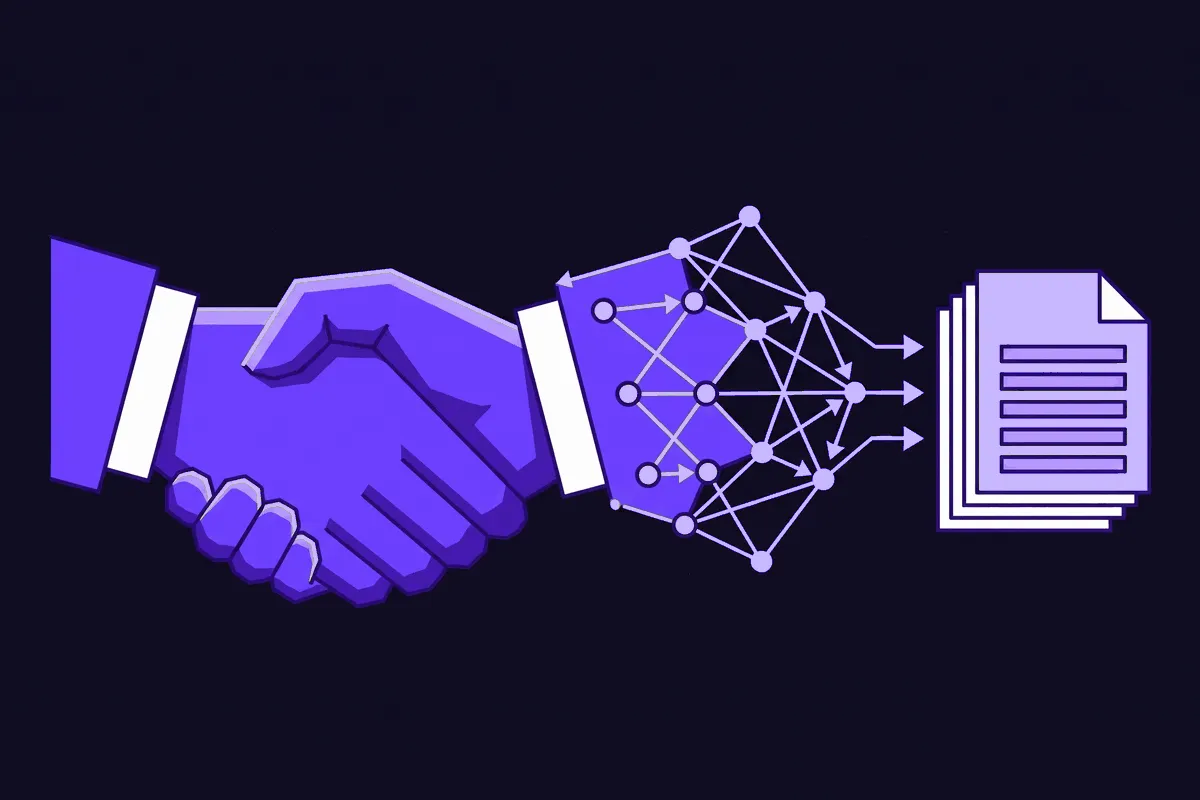
Where to draw the line most agencies get wrong
Keep the first touch human, automate the rest.
The sale, the trust, and the strategic promise need a person. Collecting the client’s details, chasing stakeholders, and turning it all into a brief do not. Sign the client with a handshake, then let AI run the discovery.
Most teams do it backwards.
They automate the welcome email, then put a real, expensive human on twelve hours of “tell me about your business” calls. The cheap part gets the robot. The relationship part is fine. It’s the grind in the middle that’s eating the wrong resource.
Here’s the reframe: discovery is not bonding. It’s intake. And intake is exactly the kind of repetitive, structured work that machines now do better than a tired junior with a Google Doc.
Knowing a client’s business cold still matters. It’s the bedrock of the work, the same way a sharp customer profile is. The only question is who does the gathering.
Every client onboarding is really two jobs wearing one name. The trust job: winning belief, setting the promise, handling nerves. The data job: learning the business, the goals, the tools, the stakeholders. Keep the first human. Stop spending humans on the second.
Why the discovery grind eats your best week
The information-gathering is where onboarding quietly rots.
It’s not one call. It’s a call, a reschedule, a follow-up because someone forgot the analytics login, another call for the person who “really owns” the brand. Every handoff adds a day.
And the meter is running the whole time.
Here’s what that actually costs:
Workers already spend 62% of the workday on mundane, recurring tasks, per Asana’s Anatomy of Work index, and lose 1.8 hours a day just hunting down information. Client discovery is that stat in a suit: your smartest people reduced to note-takers and login-chasers.
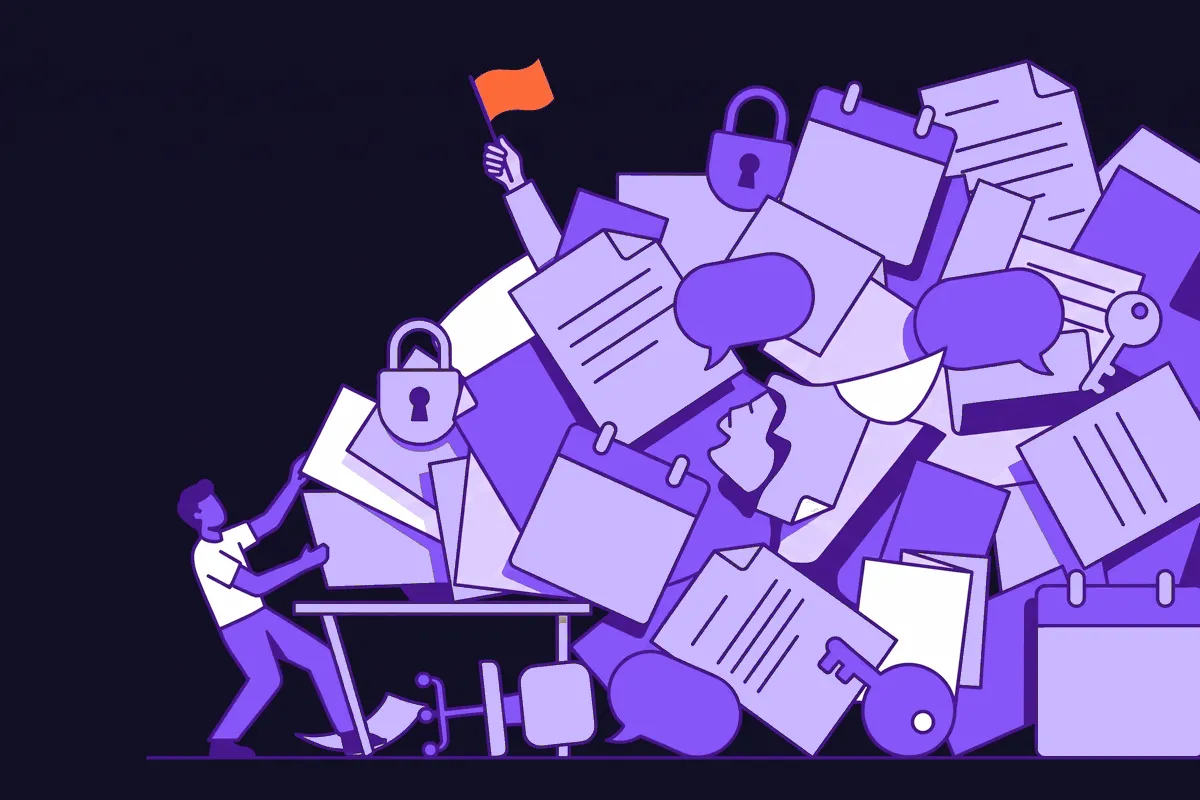
The client feels it too.
They said yes on a high. Then they hit a fortnight of forms and repeat questions before anything ships.
That gap has a cost. The longer a client waits to feel progress, the more the excitement that closed the deal cools, and a slow, foggy start is where the doubt creeps in.
It’s the same quiet dynamic behind why customers really churn: the account looks fine right up until it isn’t.
The weeks you burn gathering information are the weeks the client is deciding whether they made a mistake. Time-to-first-value isn’t a nice metric. It’s the window where trust is either banked or lost, and admin drag is what closes it late.
What to keep human in client onboarding
Some things never go to a machine, and pretending otherwise is how agencies feel cold.
Keep a person on the parts that carry emotion, judgement, or risk:
- The first touch and the close. The handshake that wins belief. Nobody signs a five-figure retainer because a workflow was polite to them.
- The strategic promise. The moment you say “here’s what we’re going to do for you.” That’s a point of view, not a data pull.
- Hard scope and money conversations. Renegotiations, awkward “that’s out of scope” moments, anything where tone decides the outcome.
- The nervous, high-stakes moments. A worried founder needs a human who gets it, not a chipper auto-reply.
The data backs the instinct. Winning a new client costs five to 25 times more than keeping one, and it’s the human relationship, not the workflow, that gets them to renew. That’s the part you never hand to a machine.
Notice what that means: the answer isn’t “all human” or “all robot.” It’s human where it counts.
Agency owners land in the same spot when they compare notes: automate what streamlines the workflow, but keep a human where trust and understanding matter most.
The signature and the strategic promise are yours to make in person. If a client’s first genuine human moment with your agency is week three, you’ve automated the one thing you should have protected.
What to automate in client onboarding
Now the grind. This is the two-thirds of onboarding that shouldn’t touch a senior calendar at all.
Hand these to a system:
- Intake reminders and access tracking. Who still owes you a login, a brand asset, a sign-off. Chase it automatically.
- Kickoff scheduling and welcome sequences. The logistics that fill an inbox and add zero insight.
- Meeting recaps and internal task creation. Notes, action items, status nudges before deadlines.
- The deep discovery itself. The big one. The structured “tell me everything about the business” conversation, run with each stakeholder, on their own time.
That last point is the shift. For years, deep discovery meant a human on a call because there was no other way to have a real, adaptive conversation. There is now.
This is where hollie earns her place. She’s an AI agent who has the discovery conversation with each stakeholder directly.
She asks the sharp follow-up when an answer is vague, then brings the whole picture back structured and ranked. No scheduling. No junior transcribing.
The founder, the marketer, and the ops lead each talk to her when it suits them. You get one clean brief instead of six half-remembered calls.
It’s the difference between a slow intake form and a conversation that adapts. If you want the mechanics of asking questions that pull real answers instead of polite noise, that’s the same discipline behind good customer interviews.
The fear is that automating discovery feels cold and costs you clients. The opposite is true: the machine clears the busywork fast, which gets the client to a real plan sooner, and a faster first win is what makes them stay. Automate the grind, then spend the saved hours being human where it counts.
How to run the hybrid: human sign-on, AI discovery
You don’t choose between the handshake and the system. You sequence them.

Here’s the flow that keeps the warmth and kills the grind:
Step 1: Win them with a human
The first touch, the pitch, the close, the promise. All you. This is where trust is built and the relationship is set. Protect it and spend real senior time here.
Step 2: Hand discovery to a structured conversation
The second the deal is signed, discovery goes async. Each stakeholder has a real conversation with an AI agent on their own schedule, no meeting to book, no calendar tetris across three departments.
Step 3: Get the brief, not the raw dump
Instead of six recordings and a junior’s notes, you get one synthesised brief: goals, tools, blockers, and what each stakeholder actually cares about, ranked. You read it in ten minutes.
Step 4: Return as a human with a plan
Now you go back in person, brief in hand, and make your first strategic recommendation. The client’s next real human moment with you is you being smart about their business, not you asking for their logins.
That sequence is what the numbers keep rewarding. Prompt, educational onboarding makes customers 86% more likely to advocate for you, and it’s exactly what agencies mean when they compare notes on what to automate versus keep human. Fast where it’s admin. Human where it’s a relationship.
Frequently asked questions
Won’t clients feel brushed off if AI runs discovery?
Only if AI runs the parts that need you. Clients feel brushed off when a human is absent from the sale and the strategy, not when a stakeholder answers discovery questions on their own time instead of on a scheduled call. Keep the handshake human and the async discovery feels like convenience, not neglect.
What should never be automated in onboarding?
The first touch, the strategic promise, hard scope and pricing talks, and any emotionally charged moment. These carry judgement and tone that decide whether a client stays. Automate the intake, the chasing, and the note-taking around them, never the human decisions themselves.
How does automating discovery reduce churn instead of causing it?
It shrinks time-to-value. The faster a client feels understood and sees a plan, the sooner trust is banked, and early value is where retention is decided. Automation removes the two-week admin drag that pushes your first real strategic moment further out.
The line is simpler than it looks
Win them human. Learn from them with AI.
Sign with a handshake. Scale with a system.
Stop spending your best people on logins and reschedules, and stop letting a robot handle the moments that actually keep a client.
The Bottom Line
The first touch wins the client, so keep it human. The discovery grind that follows is intake, not bonding, so automate it. hollie can run that discovery conversation with every stakeholder and hand you one ranked brief, so your team shows up as strategists instead of note-takers.