The Algorithmic Velocity Model: Why Traditional Testing is Dead
The traditional two-week testing cycle is dead.
Most agencies are still operating on a legacy cadence. They launch. They wait. They pray for the ‘Learning Phase’ to stabilize.
But here is the hard truth:
While you are waiting for statistical significance, Meta’s inference engine is making decisions in milliseconds.
In 2026, patience is not a virtue. It is an inefficiency.
This article outlines the Algorithmic Velocity Model. It is a framework for aligning your creative supply chain with the blistering speed of Meta’s backend infrastructure.
But first, you need to understand what changed under the hood. And why it matters to your bottom line.
The Infrastructure Revolution You Did Not See Coming
Most advertisers think Meta Ads is just a black box. You upload creative. You set a budget. The algorithm does its thing.
But there is an entire world of computational infrastructure running behind that simple interface. And in 2024-2025, Meta completely rebuilt it.
Two systems now power the entire ad delivery ecosystem.
Understanding them is not optional anymore. It is the difference between winning and losing.
System 1: Andromeda (The Retrieval Engine)
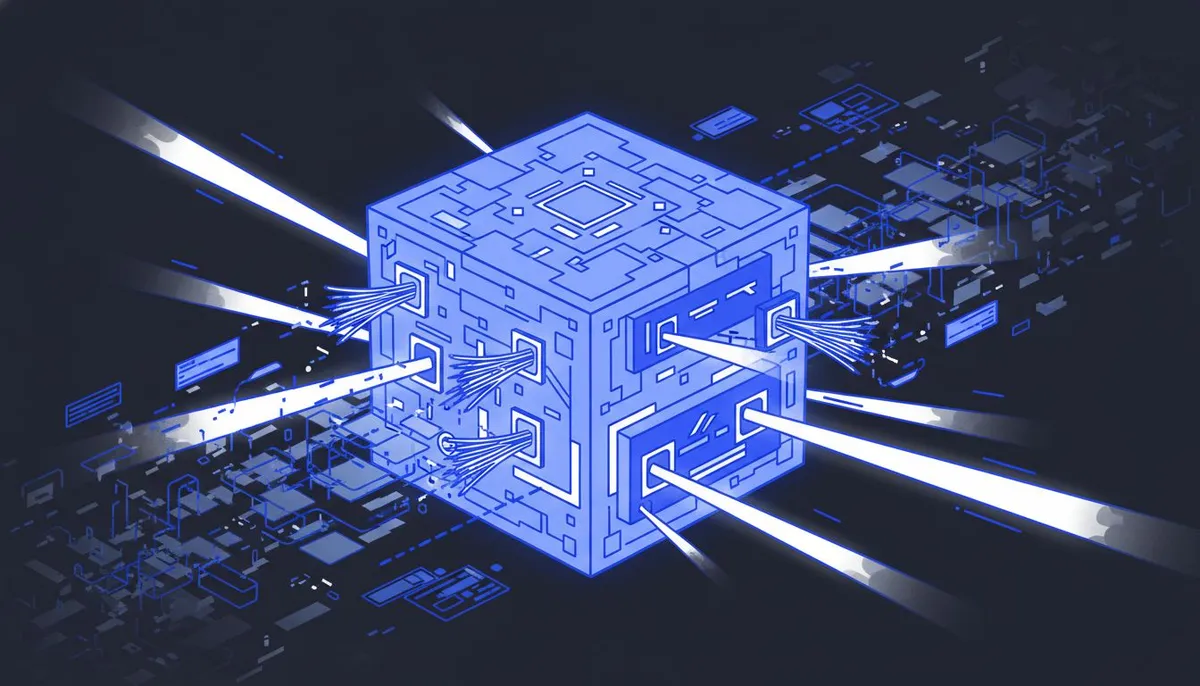
Andromeda is what most advertisers have heard about. It launched in late 2024 as Meta’s new ad retrieval system. Think of it as the “decision maker”: when a user opens Facebook or Instagram, Andromeda is the AI that decides which ads to show.
But here is what makes it different from the old system:
Scale: Andromeda represents a 10,000x increase in model capacity. The old system could evaluate thousands of potential ads per user, but Andromeda evaluates millions.
Creative-First Logic: The old system looked at your targeting settings first. Andromeda looks at your creative first. It analyzes the visual elements, the copy tone, and the video pacing, then uses those creative signals to predict which users will engage. Your creative is now the targeting mechanism.
Speed: Andromeda processes hundreds of trillions of ad evaluations per day.
That is not a typo.
Hundreds of trillions.
Every user session triggers thousands of real-time auctions. Every auction evaluates millions of potential ad/user matches. This happens in microseconds.
But here is the problem:
Andromeda is only as fast as the infrastructure running it. If the GPUs are slow, Andromeda is slow. If the model training takes weeks, Andromeda learns slowly. If there are inefficiencies in the code, Andromeda wastes computational resources.
That is where Zoomer comes in.
System 2: Zoomer (The Invisible Optimizer)
You have never heard of Zoomer.
Most advertisers have not.
But it is the reason your ads are being evaluated at the speed they are.
Zoomer is Meta’s automated performance optimization platform. It runs in the background across Meta’s entire AI infrastructure. It does not decide which ads to show. It makes sure the system that decides which ads to show runs as fast as physically possible.
Here is how it works:
Continuous Profiling: Zoomer monitors every GPU, every server, and every AI model execution in real-time. It collects billions of performance metrics per second and identifies bottlenecks instantly. Is a specific GPU running slower than expected? Zoomer sees it. Is a model training job wasting computational resources? Zoomer flags it. Is there a code inefficiency causing latency? Zoomer identifies the exact line of code responsible.
Automated Optimization: Zoomer does not just report problems. It fixes them automatically. If it detects GPU underutilization, it redistributes workloads. If it finds inefficient code patterns, it triggers compiler optimizations. If it identifies slow inference paths, it reroutes traffic to faster alternatives. All of this happens without human intervention.
The Results: The numbers are staggering.
Meta achieved a 75% reduction in training time for ads relevance models in 2024. That means the algorithm learns your audience preferences in 6 hours instead of 24 hours.
They achieved 20% QPS (queries per second) improvements across serving infrastructure. That means the system can evaluate 20% more ad/user combinations in the same time window.
They reduced power consumption by 10-45% across different workloads. That means they can run more AI models with the same energy budget.
Why This Matters to You
You might be thinking: “This is interesting, but why do I care about Meta’s internal engineering?” Here is why:
The algorithm learns faster now. When Zoomer cuts training time by 75%, it means your campaigns exit the “Learning Phase” faster. The system identifies winning creative hooks in hours, not days. If you are still waiting two weeks to evaluate performance, you are operating on a cadence that the infrastructure has outpaced.
The system can test more variations simultaneously. When Zoomer improves QPS by 20%, it means the auction can evaluate more creative permutations per user. The old infrastructure might test 5 of your ads against a user, but the new infrastructure tests 20. But only if you give it 20 ads to test. If you only upload 3 creatives, you are underutilizing the system’s capacity.
Creative fatigue happens faster. When the infrastructure is optimized for speed, the algorithm burns through audiences faster. A creative that used to perform for two weeks now fatigues in five days. The system is showing your ad to more people, faster. This means you need a higher creative refresh rate to match the infrastructure’s velocity.
Computational efficiency creates auction advantages.
When Meta reduces power consumption by 45%, they redirect that saved capacity.
Where does it go?
Into running more complex models. Into testing more creative variations. Into delivering better ad/user matching.
The advertisers who understand this are structuring their creative pipelines to exploit the surplus capacity.

The Latency Arbitrage Opportunity
Here is the strategic insight:
Most advertisers are still operating on a 2019 cadence. They launch campaigns. They wait a week. They review the data. They make changes.
But the infrastructure has accelerated. Meta’s systems are now making optimization decisions in real-time. Every millisecond of latency matters.
If your creative testing cadence is measured in weeks, you are getting outmaneuvered by competitors measuring theirs in hours.
This creates an arbitrage opportunity.
Arbitrage is profiting from a difference in speed or information.
In this case, the arbitrage is between:
-
How fast the infrastructure can test creative (hours)
-
How fast most advertisers produce and rotate creative (weeks)
The gap between those two speeds is where the money is.
If you can compress your creative production cycle from two weeks to 72 hours, you exploit the latency arbitrage. You identify winning angles before your competitors. You scale them before the CPMs spike. You extract maximum value before creative fatigue sets in.
This is not about being “scrappy” or “moving fast.” It is about matching your operational velocity to the infrastructure velocity.
Advantage+ shopping campaigns have driven a 32% increase in ROAS precisely because they automate this velocity matching. The algorithm tests faster than humans can. The question is: can you produce creative fast enough to keep up?
Creative Is The New Targeting (And Why That Changes Everything)
We used to pull levers on audience segments. Those levers are gone. Meta removed detailed targeting exclusions in early 2025 for a reason. The Andromeda retrieval engine does not need your targeting instructions anymore.
Here is what happens now: (1) You upload a video ad. (2) Andromeda’s computer vision models analyze every frame. (3) It extracts visual features: Is there a person? What is their age? What is the setting? What is the mood? (4) It scans the copy for linguistic signals: Is the tone professional or casual? Is it selling urgency or exclusivity? (5) It analyzes the pacing: Is the hook in the first 3 seconds? Does it match patterns of high-performing ads? (6) It builds a “creative fingerprint” from these signals. (7) It uses that fingerprint to predict which user profiles are most likely to engage.
Your creative is now the targeting mechanism. If your creative features a gym setting with energetic music, Andromeda finds fitness enthusiasts. If your creative features a calm aesthetic with minimalist design, Andromeda finds that audience. You do not tell it who to target. The creative tells it. This is why Bradford Blecker says: “If your creative isn’t working, no amount of targeting will save it.” There is no “targeting” to fix anymore. There is only creative.
The Computational Capacity Problem
Most advertisers do not have a strategy problem. They have a supply problem. Meta’s infrastructure can now process 10,000x more creative variations than the old system, but you are still producing creative at 2019 volumes. You launch three ads, but the system can test 30. You rotate creative every two weeks, but the system can rotate every two days. You are underfeeding a machine optimized for industrial-scale throughput.
Zoomer has removed the computational bottlenecks. The bottleneck is now on your side: it is your creative production velocity.
Prioritize UGC-style video with natural lighting. It consistently outperforms polished brand assets because it feels native to the feed, reducing the ‘ad blindness’ friction.
The Algorithmic Velocity Model: Implementation
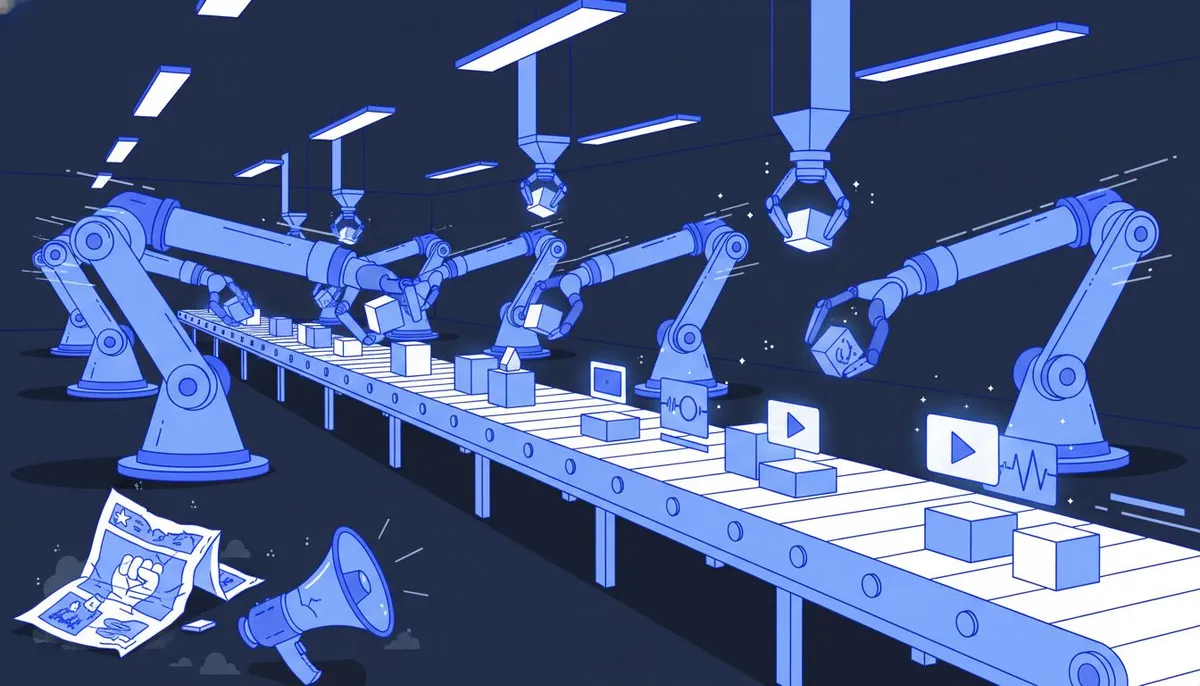
Philosophy is useless without execution. You need a system. The Algorithmic Velocity Model requires you to restructure your entire operation. You must move from a “Campaign” mindset to a “Factory” mindset. Here is the step-by-step blueprint to implementing this model in your business immediately.
Phase 1: High-Volume Supply Chain
You cannot win with three ads per month. You need thirty. This does not mean thirty different concepts. It means modular iteration at scale. Take one winning angle, create five different hooks for that angle, and create three different visual styles for each hook. Now you have fifteen assets from one core idea.
Why does this work? Because Andromeda’s retrieval system tests creative variations in parallel. It does not test them sequentially like humans do. It evaluates all fifteen variations against millions of users simultaneously.
The winning hook emerges in hours, not weeks, but only if you provide the volume. Meta’s Zoomer-optimized infrastructure can handle this load. The serving layer is designed for high-throughput creative testing. Do not aim for perfection. Aim for volume and variance. The algorithm wants options, so give it options.
Phase 2: Validate Before You Spend
This is where amateurs lose money. They throw everything into the live auction to see what sticks, and that is just burning cash. You need to know what your real audience responds to before you spend the budget. This is where hollie becomes a defensive necessity. holito’s AI agent has real conversations with your customers and hands you their exact words and objections, ranked.
Here is the logic: Meta’s Andromeda system will evaluate your creative in milliseconds, but those milliseconds cost money. Every impression is a micro-bet on a creative/user match. If the creative is weak, you are placing thousands of losing bets per hour.
Synthetic validation flips this model. You upload the asset to a simulation tool. It predicts engagement probability before you spend a dollar and identifies weak hooks before they burn budget. You deploy only what validates. This creates a filter for your creative supply chain and prevents you from feeding low-signal assets to an auction optimized for speed. The infrastructure will test your creative at velocity, but velocity without direction is just chaos. Validation provides direction.
Phase 3: The Velocity Launch Structure
Forget the old “ABO” testing structures. Use a simplified high-velocity launch method. Here is the setup: Launch one CBO (Campaign Budget Optimization) campaign, create one Broad Ad Set per creative concept family, and load your validated assets into that Ad Set. Let the algorithm distribute spend based on performance signals.
Meta’s optimized infrastructure will identify the winner within 24-48 hours. Why is it so fast now? Because Zoomer has accelerated the feedback loop. The old system required days to collect enough data for statistical confidence, but the new system collects that data in hours because it is evaluating your creative against a larger audience pool at higher velocity.
If an asset gets no spend after 48 hours, kill it. It is not “learning.” It was evaluated. The infrastructure processed it at speed and rejected it based on predicted performance. Move on.
Phase 4: Ruthless Culling and Rapid Rotation
This is the hardest part for most founders. You must detach your ego from the creative. If a video has a high Hold Rate but zero conversions, it is a vanity metric. Kill it. If a static image is ugly but has a 4.0 ROAS, scale it. Your opinion does not matter. The market’s wallet is the only vote that counts.
Rotate new creatives in every 72 hours. Why 72 hours? Because the infrastructure’s acceleration has shortened creative lifespan. Zoomer enables faster model iteration cycles on the backend. The algorithm updates its understanding of your audience daily. Creative that worked on Monday might be fatigued by Thursday. What used to burn out in two weeks now burns out in five days. The system is optimized for speed, and your creative rotation cadence must match that infrastructure speed.
A healthy Velocity Model should see a ‘Creative Win Rate’ of roughly 10-20%. If you are winning more than that, you aren’t testing enough radical ideas. If you are winning less, your initial research is weak.
Real-World Application: The SaaS Example
Let’s look at a concrete example. Imagine you are selling a B2B SaaS tool for project management.
The Old Way (The Losing Way)
You create one polished “explainer video” that explains all the features. You target “Project Managers” and “Small Business Owners” and spend $5,000 over two weeks. The algorithm shows it to everyone in that bucket.
Your CPMs are high because the creative is generic. The Andromeda retrieval system cannot extract specific signals from your generic creative, so it defaults to broad distribution. Broad distribution means high CPMs and low conversion rates. You get a 0.8 ROAS. You blame the platform, complain about iOS 14.5, and write angry posts in Facebook groups.
The Velocity Way (The Winning Way)
You identify three distinct pain points from customer interviews:
-
“My team misses deadlines.”
-
“I spend too much time on Zoom.”
-
“Jira is too complicated.”
You create five simple, raw UGC-style videos for each pain point.
Each video has a different hook but the same core message.
You validate them through synthetic simulation before launch.
The simulation identifies which hooks have the highest predicted engagement.
You launch three separate Ad Sets (Broad targeting, CBO). Ad Set A attacks the “Deadlines” pain point, Ad Set B attacks the “Anti-Zoom” pain point, and Ad Set C attacks the “Jira complexity” pain point. Andromeda’s retrieval system now has 15 distinct creative fingerprints to work with and can match specific pain points to specific user profiles with precision.
Within 48 hours, you see that the “Anti-Zoom” angle is getting 70% of the spend with a 3.0 ROAS. Why? Because Andromeda identified that the creative signals in those videos (remote work imagery, frustration tone, async communication messaging) match a specific high-value user profile. The infrastructure found your audience through the creative, not through targeting settings.
You immediately kill the other two Ad Sets and reallocate that budget to the winner. You then produce ten new variations of the “Anti-Zoom” concept, testing different hooks: “Your team hates Zoom meetings,” “Replace 80% of your standups,” and “Async > Meetings.” You launch these into a fresh Ad Set within 72 hours.
Meta’s Zoomer-optimized infrastructure processes this rapid iteration without degradation. The system can handle the volume because the computational bottlenecks have been removed. You scale the winner to $500/day. This is how you win.
The Economics of Industrial-Scale Creative Testing
The numbers do not lie. Over 1 million advertisers are already using generative AI tools. They create 15 million ads a month, flooding the auction with creative volume. Supply is infinite, but attention is finite.
Meta’s response to this creative flood? They built Zoomer to handle it. They optimized their entire AI stack to process industrial-scale creative volume, reduced GPU underutilization across hundreds of thousands of devices, accelerated inference workloads by double-digit percentages, and deployed automated debugging at scale. The platform is now engineered to process creative at industrial throughput.
To compete, you must move from “campaign management” to “asset portfolio management.” Your job is no longer to tweak bids or adjust targeting. Your job is to maximize the velocity of high-performing creative entering the system. You are not a media buyer anymore. You are a creative portfolio manager operating at algorithmic speed.
Meta has built the computational infrastructure to process your output. The question is: can you produce enough high-quality input to saturate their capacity? Most advertisers cannot. That is your competitive advantage.
The Bottom Line
The days of manual tweaking are over. Meta’s Andromeda retrieval engine and Zoomer optimization infrastructure reward speed and creative volume. Stop guessing at what to say. Let hollie have real conversations with your customers first, build your creative on their words, then scale what works.
If you are struggling with the October 2025 Andromeda update issues like budget allocation bugs or targeting overrides, we have a dedicated guide that covers the tactical fixes: Meta Andromeda 2025: Regain Control of Your Facebook Ads.
For the November 2025 GEM update that replaced Andromeda with a predictive model, see our guide on fixing ads volatility and boosting ROI with the GEM update.
For broader ad spend optimization strategies across platforms, check out our guide on optimizing ad spend in 2025.