Finding your next customer segment feels impossible sometimes.
Most advice is theoretical fluff that doesn’t work in the real world.
You’re told to ‘listen to the customer,’ but you’re drowning in conflicting feedback and useless data. It’s one of the hardest things in business.
I promise you a better way. This is a no-nonsense playbook to find and validate new customer segments without guesswork and without burning your runway on expensive market research.
Here’s the plan: We will dig into your existing data, exploit your competitors’ weaknesses, talk to humans the right way, and then validate everything with a rapid-fire outbound sprint. Let’s build.
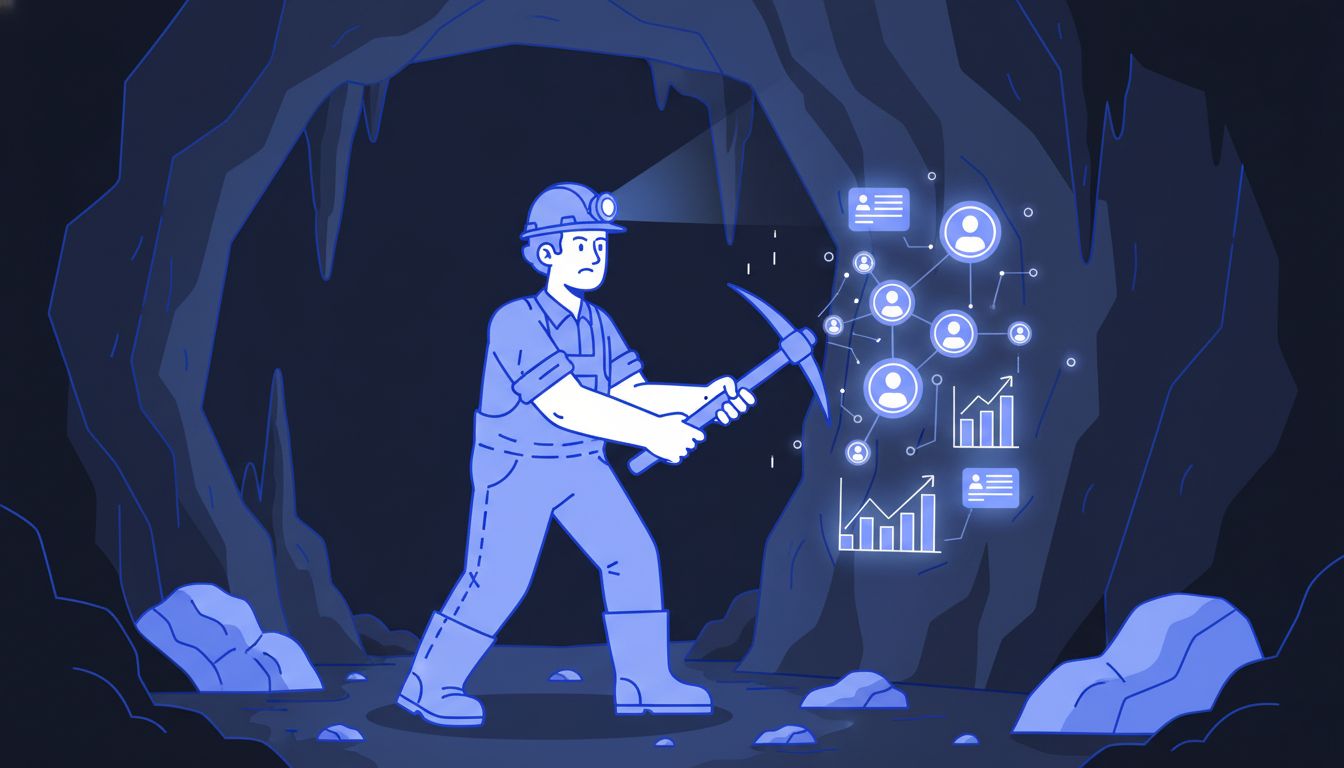
How to identify new customer segments
Forget focus groups and broad market surveys for a minute. The gold is already in your systems. You just have to know where to look.
Step 1: Analyze Your Best and Worst Customers
Your CRM is a goldmine. Stop treating it like a glorified rolodex and start interrogating the data.
First, pull a list of your customers with the highest Customer Lifetime Value (CLTV). Who are they? What industry are they in? What was the sales cycle like? Find the common patterns in your biggest wins.
Companies that use customer analytics see dramatically higher performance. The data you already have is your cheapest path to higher profits.
Next, do the opposite. Look at your churned users. Who left the fastest? Who complained the most? These are your anti-ICPs. Understanding who you shouldn’t sell to is just as critical as knowing who you should.
Step 2: Exploit Your Competitors’ Blind Spots
Your competitors are doing some of the work for you. They’re out there getting feedback, and a lot of it is public.
Go read their negative G2 reviews, their App Store complaints, and the frustrated comments on their social media ads. What problems are their customers having that you can solve? What segments are they failing to serve properly?
This isn’t about copying them. It’s about finding the gaps they’ve created in the market and driving a wedge right through them.

Step 3: Get Out of the Building (The Right Way)
Talking to customers is crucial, but most people do it wrong. They ask leading questions and get vanity metrics. You need to run the “Mom Test.”
Don’t ask, “Do you like my idea?” Ask about their life. Ask about their workflow. Ask about how they solved this problem before you came along. Dig into their actual behaviors, not their opinions about your product.
Research shows you can uncover the core themes of an ICP within just 6 to 12 interviews for focused studies. That’s it. You don’t need a massive budget, you need a dozen focused conversations.
When a customer tells you about a problem, ask “Why?” at least three times. The first answer is surface-level. The third answer is where the real pain point, the real motivation, is hiding.
This is where you collect raw messaging. You’ll hear the exact words potential customers use to describe their problems. For example, hollie does this for you. holito’s AI agent has real conversations with your target customers and brings back their exact words and objections, ranked, before you spend a dollar on ads. If you’re starting from zero customers, check out our zero-to-one guide to defining your ICP without sales data.
The “Mom Test” approach comes from Rob Fitzpatrick’s book of the same name, which teaches you how to ask questions that even your mom can’t lie to you about. For more on validation techniques, see our guide on making better survey questions.
Step 4: Map Psychographics, Not Just Demographics
Demographics tell you who someone is. Psychographics tell you why they buy. Learn how to unlock deep audience insights with our comprehensive guide on AI psychographic mapping.
Who cares if your target customer is a 35-year-old manager? What you need to know is what they value. Do they prioritize speed over quality? Are they risk-averse? What triggers them to go looking for a new tool?
This deeper understanding is what allows for true personalization. And it works. According to Litmus research, over 90% of marketers report that segmentation boosts email performance.

Getting the psychographics right changes everything. McKinsey research from 2025 found that 71% of consumers expect personalized interactions, and 76% get frustrated when companies don’t deliver. Personalization isn’t optional anymore. It’s the difference between shouting into the void and having a real conversation.
Step 5: Validate Everything with a 30-Day Sprint
An ICP is just a hypothesis until it’s been tested with real-world data.
Here’s the framework. It’s simple and fast.
-
Define the Hypothesis: Based on your research, write a one-paragraph description of your new target segment.
-
Build a List: Create a list of 100 prospects who fit this exact profile.
-
Craft Messaging: Write 2-3 messaging angles based on the exact pain points you uncovered in your interviews.
-
Launch Outreach: Run a multi-channel campaign. Email. LinkedIn. Cold calls. Whatever it takes.
-
Track Early Signals: Monitor open rates, reply rates, and the quality of the responses. Are they booking meetings? Are they asking smart questions?
After 30 days, you’ll have all the data you need. You’ll know if you found a new goldmine or if you need to go back and refine your hypothesis. Action over analysis paralysis.
Rapid Fire FAQ
Do you define your ICP early or sell to everyone first?
Define a starting hypothesis for your ICP early, but be prepared to refine it aggressively based on who actually pays and stays. Don’t wait for perfection.
How do I find my ideal customer without spending a fortune on research?
Start with your own data: analyze your best existing customers. Then, conduct 10-15 focused customer interviews using the “Mom Test” method. This costs time, not cash.
How many customer interviews are actually enough?
For B2B, you can identify the core patterns and problems within 6 to 12 interviews for homogeneous groups. The goal isn’t statistical certainty, it’s actionable insight.
The Bottom Line
Identifying new customer segments isn’t magic. It’s a process. Start with your existing data, analyze your competitors’ failures, conduct focused interviews to uncover real pain, and validate your assumptions with rapid, targeted outreach. Stop guessing. hollie has real conversations with your customers and brings back the reasons that actually drive them, ranked. Explore more customer development resources in our knowledge hub.